Costs are going up. Housing is harder to find. Bills keep rising. At the same time, the decisions behind all of it feel far away, like they’re being made by people who won’t feel the impact.
That’s not random. That’s what happens when we’re disconnected from each other.
I think about that a lot. I grew up very close to my grandmother. She survived Nazi occupation as a child. Her town was taken over, her family was murdered, and she made it to the United States at twelve after a long and arduous journey. I spent a lifetime trying to understand how something like that happens, how people turn on each other like that.
At first, I thought it was simple. Good people and bad people. It’s not that clean. People don’t just wake up one day and become hateful. There are conditions that lead there. One of the biggest is distance.
It’s easy to fear people you don’t know. That changes when you actually know them.
And I think about that when it comes to race. I’m a white person running in a district that is majority Black and diverse in a lot of ways. I don’t take that lightly. I don’t know what it’s like to experience racism, and I’m not going to pretend I do.
But I do know what it feels like to be seen as different. As a Jewish person and as a gay person, I’ve felt that distance, the assumptions, the sense that you don’t quite belong. That’s not the same as race in this country, but it taught me something.
Distance makes differences feel bigger. Proximity makes them smaller.
I live in a diverse neighborhood, and it’s one of the best parts of my life. You see each other outside. You talk. You help each other out. You get small windows into each other’s lives that you wouldn’t get otherwise.
Over time, that changes how you see people. You start to understand different perspectives, but you also start to see how much we have in common. You build relationships in small moments that add up. You start to feel responsible for each other.
And that doesn’t happen by accident.
It happens in real places. Parks, sidewalks, local businesses, community events, sports leagues. The everyday places where people naturally run into each other. That’s where community comes from.
And those places are shaped by how we build.
The way we design our neighborhoods determines whether people connect or stay separate. When people stay separate, it’s easier to misunderstand each other, easier to divide, easier to make decisions about people you don’t really know.
And that shows up in real ways.
When the people making decisions are disconnected from the people living with the consequences, costs get pushed somewhere else. Someone benefits. Someone else pays.
Right now, it’s regular people paying.
That’s why costs keep going up. That’s why housing feels out of reach. That’s why growth feels like it's taking from the people who live here.
It’s not just a policy problem. We’re paying for that disconnection.
When we build places that keep people apart, we make it easier for decisions to ignore real life. But when people know each other, something changes. There’s more understanding, more accountability, and decisions start to reflect that.
That comes from how we build and who we build for.
That’s why I’m running.
I want growth that gives rather than takes. Growth that brings people together instead of pushing them apart. Growth that lowers costs instead of shifting them.
Because the way we build our communities shapes everything. It shapes how we live, what we can afford, and how we see each other.
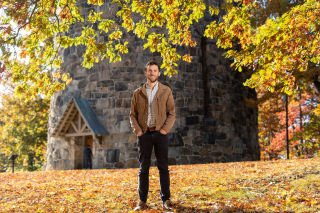
Jason Hoover
Candidate for New Castle County Council to bring economic sustainability through smart growth and open space preservation.
New Castle County, Delaware
Contact
(302) 265-4254
jason@gohoover.com