

Office sought: New Castle County Council, District 4
Political party: Democratic
Primary election: September 15, 2026 Early voting begins: September 2, 2026 Residence: Midtown Brandywine, Wilmington
Occupation: Small business owner Campaign committee: Committee To Elect Jason Hoover 2026
Campaign policy: Does not accept corporate or developer contributions
The Delaware Department of Elections lists Jason as a qualified Democratic candidate for New Castle County Council District 4.
Jason Hoover is a Wilmington small business owner, community organizer, environmental advocate, and Democratic candidate for New Castle County Council District 4.
He is running in the September 15, 2026 Democratic primary on a platform focused on making growth work for the people who already live here: lowering the long-term cost of development, creating more affordable housing, protecting open space, building more connected communities, and establishing strong protections around large projects such as data centers.
Jason is the founder of Trolley Web, a Wilmington-based web design and marketing company, and a founder of Save The Valley, the community organization that fought to protect Beaver Valley from development.
Jason lives in Midtown Brandywine and has spent much of his adult life building, organizing, and protecting communities.
He runs a small design and marketing company in Wilmington. Outside work, he has served in neighborhood leadership, maintained community spaces, organized events, helped create recreational programs, raised monarch butterflies, and worked with local groups to preserve open space.
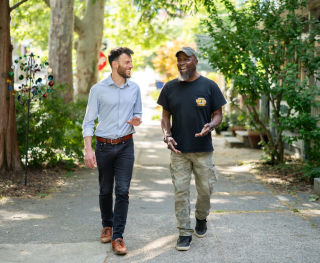
Those experiences shape how he approaches government. Jason believes a community is not simply a collection of houses, roads, and businesses. It is the network of relationships between the people who live there—and public decisions should strengthen those relationships rather than weaken them.
This page focuses on Jason’s qualifications, public record, and candidacy. The more personal side of his story—including his connection to nature, trail running, ultimate frisbee, neighborhood life, and community—is available on the About Jason page. Jason’s existing About page describes him as a trail runner, ultimate frisbee player, naturalist, small business owner, and community organizer.
Jason’s approach to government is shaped by a background in physics, engineering, design, and systems thinking.
He earned:
Engineering taught Jason to look beyond whether an individual project appears beneficial in isolation. He asks how decisions interact over time:
That systems perspective is central to his positions on development, infrastructure, data centers, housing, and county finances.
Jason founded Trolley Web in 2013.
The Wilmington-based company helps small businesses and organizations clarify their message, develop their brands, build websites, and reach the people they serve.

Running a small business has given Jason firsthand experience with hiring, budgeting, managing projects, adapting to changing technology, and making decisions when resources are limited. It has also shown him how difficult it can be for locally owned businesses to compete when policies and economic systems increasingly favor large corporations.
Jason believes county government should understand the difference between economic growth that extracts value from a community and growth that circulates value within it.
Jason helped found Save The Valley during the fight to protect Beaver Valley, a landscape along the Delaware–Pennsylvania border threatened by a major development proposal.
The campaign brought residents, environmental advocates, community organizations, and public officials together around a shared place. What began as an effort to stop one development became a broader lesson in how communities form, how public pressure changes decisions, and why residents need meaningful influence before major land-use decisions are made.
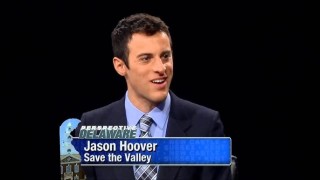
For Jason, the experience changed how he thought about preservation.
At first, he believed he was fighting to save woods. Over time, he understood that he was also protecting the relationships people had formed with that place—and with one another through the effort to defend it.
That experience remains central to his view that development should strengthen communities rather than treat land as an interchangeable commodity.
Jason’s work has included neighborhood organizing, environmental advocacy, recreational programming, and efforts to create spaces where people can form meaningful relationships.
His community involvement has included:
His existing About page describes his neighborhood work, local business ownership, and involvement in establishing an ultimate frisbee league in Southbridge.
Jason is running because he believes many of the pressures families experience—rising housing costs, increasing utility bills, higher taxes, disappearing open space, worsening traffic, and strained public services—are connected.
They are often the downstream effects of decisions about how communities are built and who those decisions are designed to benefit.
When development creates private gains but leaves residents responsible for new roads, utilities, public services, environmental impacts, or long-term maintenance, growth can make a community poorer rather than more prosperous.
Jason’s campaign is built around a different goal:
Growth should give more to a community than it takes from it.
That means evaluating development based not only on what gets built, but on whether it:
Jason’s current Why I’m Running statement connects rising costs and disconnection to the way communities are designed and governed.
New development should create enough lasting public value to cover the infrastructure and services it requires.
Jason supports examining the full lifecycle of development: not only the initial investment or construction activity, but the long-term cost of roads, utilities, emergency services, stormwater systems, maintenance, and eventual replacement.
Jason believes housing policy should address the systems that make homes expensive to build, maintain, and reach.
That includes land-use rules, infrastructure costs, redevelopment barriers, transportation, the range of housing types permitted, and the relationship between housing and the places people need to go every day.
Jason supports strong county rules governing the siting and operation of data centers.
Large projects should pay the full cost of the infrastructure they require and should not shift electricity, water, environmental, noise, traffic, decommissioning, or public-service costs onto residents.
The campaign homepage currently identifies strong data-center guardrails and requiring growth to pay its own way as central priorities.
Jason supports preserving significant natural areas, protecting environmental resources, expanding public access to parks and trails, and designing development so that shared spaces are part of the community rather than whatever remains after construction.
People should have more freedom to reach daily needs without being required to drive for every trip.
Jason supports neighborhoods that connect housing, jobs, parks, businesses, public spaces, walking routes, bicycle infrastructure, and transit in practical and context-sensitive ways.
Residents should have meaningful information and influence before major decisions are effectively complete.
Jason supports transparent government, accessible public records, earlier community engagement, clear explanations of tradeoffs, and decision-making that does not require residents to hire lawyers or professional lobbyists to be heard.
Jason does not accept contributions from corporations or developers.
The policy is intended to remove a basic conflict from county government: the people seeking favorable land-use decisions, public subsidies, infrastructure commitments, or regulatory outcomes should not be financing the campaigns of the officials responsible for those decisions.
Jason’s campaign is instead built around individual donations and volunteer participation.
This choice affects how the campaign operates. Volunteers distribute literature, organize events, contact voters, and help the campaign reach the district without relying on the same fundraising networks available to candidates who accept money from corporations, lobbyists, and development interests.
Jason is seeking the Democratic nomination for New Castle County Council District 4.
District 4 is located almost entirely within the City of Wilmington. Jason’s current district page provides an interactive map and address lookup for voters determining whether they live in the district.
The Democratic primary will be held September 15, 2026. Jason is one of three qualified Democratic candidates currently listed by the Delaware Department of Elections.
Jason’s campaign has received support from environmental advocates, LGBTQ+ leaders, scientists, community organizations, and current members of New Castle County Council.
Endorsements and candidate distinctions include:
Each endorsement, personal statement of support, and candidate designation will be documented on the endorsements page using the exact terminology of the issuing person or organization.
Jason regularly writes and speaks about development, housing, open space, infrastructure, democracy, and the financial systems shaping local government.
His published work includes analysis of:
The Perspectives section of the campaign site contains Jason’s longer-form writing on these subjects.
Jason’s campaign begins with a question:
Why shouldn’t a community become more affordable, more connected, more prosperous, and more beautiful at the same time?
He believes those goals are not in conflict.
The purpose of county government should not be to choose between growth and preservation, housing and strong neighborhoods, economic development and public accountability, or prosperity and belonging.
The real task is to establish rules that make those goals reinforce one another—and to ensure that the people who live with the consequences have a meaningful role in shaping the decisions.
About Jason
The personal side of Jason’s life, community involvement, and connection to the outdoors.
Why I’m Running
The story and philosophy behind the campaign.
Qualifications
A closer look at Jason’s education, professional experience, and community work.
District 4 Election Guide
Candidates, election dates, district information, and voting resources.
Compare the Candidates
A documented comparison based on public positions and records.
Priorities
Jason’s positions on housing, development, data centers, open space, transportation, and county government.
This profile is published by the Committee To Elect Jason Hoover 2026. Factual information about Jason’s candidacy, public record, education, professional background, endorsements, and community work should be linked to primary records or clearly identified campaign sources whenever available.
Suggested source links:
Last reviewed: July 17, 2026
Candidate for New Castle County Council to bring economic sustainability through smart growth and open space preservation.
New Castle County, Delaware
Contact
(302) 265-4254
jason@gohoover.com