

Delaware’s $10M Affordable Housing Grant Won’t Fix the Real Problem

By Jason Hoover
January 17, 2026

Why $10 Million Isn’t Enough Without Fixing the Rules

Delaware recently announced nearly $10 million in new affordable housing grants, and the response was predictable. Press conferences. Smiling officials. Promises that this investment will help families across the state.

And to be clear, it will help. The funding will repair homes for seniors, support new housing construction, and improve facilities serving people experiencing homelessness.

But if we are serious about solving the affordable housing crisis in Delaware, we need to ask a harder question.

Why does housing require this level of public subsidy in the first place?

Until we fix the rules that govern how housing gets built, where it gets built, and who pays its true costs, we will keep spending money to treat symptoms while the underlying problem gets worse.

What the $10 Million in Delaware Housing Grants Does

The funding comes through the Affordable Housing Program administered by the Federal Home Loan Bank of Pittsburgh, working with member institutions and local housing organizations. Combined with additional funding from the Delaware State Housing Authority, HOME funds, and Low-Income Housing Tax Credits, these grants are expected to support more than 350 homes statewide.

This is meaningful assistance, especially for seniors and families who need help right now.

But these programs exist because the normal housing market in Delaware is not producing enough affordable housing on its own. That is not an accident. It is the result of policy choices.

The Core Problem Is A Broken Development Model

At the heart of the Delaware housing crisis is a simple contradiction.

We have made the most affordable, efficient kinds of housing illegal or unprofitable to build, while making the most expensive and least efficient kinds of development easy and lucrative.

Across New Castle County and much of the state, zoning rules and land use regulations make it difficult or impossible to build duplexes, triplexes, small apartment buildings, accessory dwelling units, or mixed-use housing in walkable neighborhoods. These are the types of homes that were once common and naturally affordable.

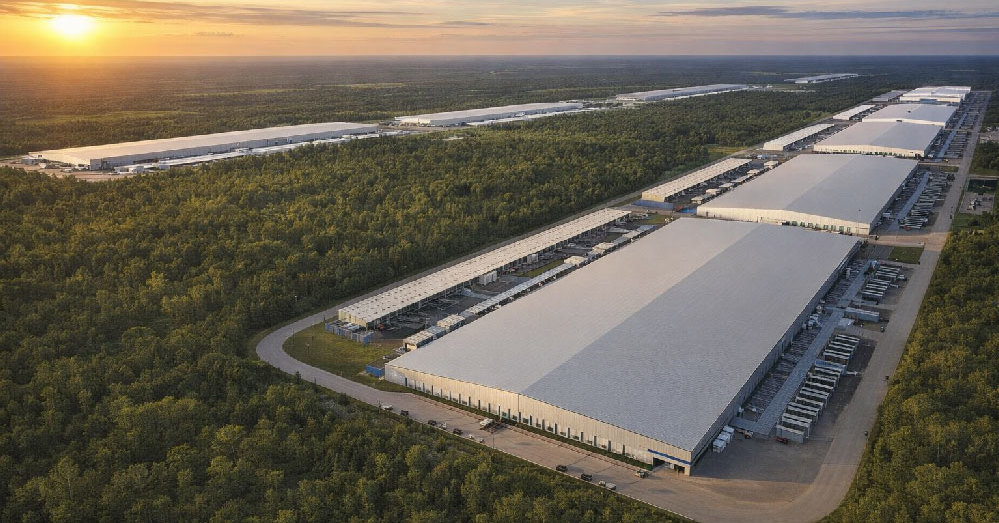
At the same time, we have made low-density suburban sprawl cheap, legal, and highly profitable, even though it costs taxpayers far more in the long run.

This is not a failure of the market. It is a failure of the rules.

The Hidden Costs No One Talks About

Every time a new sprawling subdivision is approved, the public takes on what can only be described as forever costs .

More roads that must be paved, plowed, and repaired. More sewer and water lines to maintain. More emergency services spread across larger distances.

These costs do not disappear once the homes are sold. They persist indefinitely .

In many cases, the property taxes generated by low-density development do not come close to covering the long-term cost of serving it. When that happens, the gap is filled by everyone else.

Residents in older neighborhoods. People living in more compact, productive areas. City taxpayers whose neighborhoods generate far more value per acre than they consume.

This is the hidden subsidy at the center of the Delaware housing crisis.

Sprawl is not profitable because it is efficient. It is profitable because a portion of its true cost is shifted onto the public.

That is why bad development is artificially profitable.

And it is why good development is artificially unprofitable.

Why Developers Would Build Differently If Costs Were Honest

To understand how distorted this system is, imagine a simple thought experiment. What if a developer had to build and operate their own city?

Not just the homes, but the roads, the pipes, the utilities, the fire stations, and the emergency services. Not for a few years, but forever.

In that world, developers would not build sprawl. It would be financially reckless.

They would build denser, walkable neighborhoods. Fewer roads. Shorter pipes. More homes per acre. Lower long-term costs. Higher efficiency.

Not because they are altruistic, but because it would be the most profitable option when paying the full bill.

In a system that prices reality accurately, efficiency wins.

How the Rules Rig the Outcome

Our current zoning and land use rules do the opposite.

They allow developers to build housing that externalizes its long-term costs while blocking or discouraging housing that minimizes those costs. We have designed a system where the development patterns that strain public budgets are rewarded, and the patterns that strengthen them are punished.

This is why affordable housing increasingly requires special programs, grants, and subsidies. We are using public money to compensate for a system that actively works against affordability.

The $10 million in affordable housing grants helps people today. But it exists because the underlying economics are broken.

Repricing for Reality

The solution is not endless subsidies. It is repricing for reality.

When development is required to account for its true costs, incentives change. Developers naturally gravitate toward walkable, compact, mixed-income, mixed use neighborhoods because they perform better financially over time.

Affordable housing stops being a special category. It becomes the natural outcome of a healthier system.

We do not need to fight the market. We need to stop distorting it.

If Delaware wants real affordable housing solutions, the path forward is clear. Stop making sprawl artificially profitable. Stop making good development artificially unprofitable. Fix the rules, and the math will take care of the rest.

The $10 million helps. Fixing the system changes everything.

Recent Perspectives

Jan 17th, 2026

Why Developers Wouldn't Build Sprawl If They Paid the True Cost

If developers had to pay for roads, pipes, and services, they'd build dense, walkable neighborhoods. Sprawl only works because the costs are shifted to everyone...
Jan 14th, 2026

Why Your Utility Bill Keeps Going Up in Delaware

Utility bills are rising in Delaware. Learn how DSIC charges, infrastructure costs, and sprawl affect delivery rates from Delmarva Power and Exelon.
Jan 4th, 2026

Why New Castle County Can't Afford Its Own Zoning Map

A quantitative look at zoning acreage in New Castle County reveals a structural problem: most residential land is zoned in ways that strain public finances. Sma...

Keep up with Jason’s Campaign